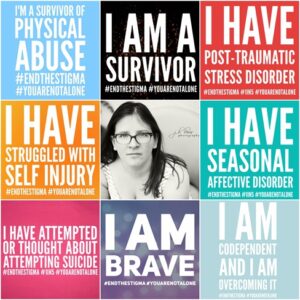
The journey continues: How I’m healing from spiritual abuse

Editorial Note: The following is reprinted with permission from Eleanor Skelton’s blog. It was originally published on April 20, 2018. 

So for those of you who’ve been around me a while know that I came out of a fundamentalist Christian background, and I’ve been working on weeding those things out of my life for several years.

Those old thought patterns were rooted in some people’s unhealthy desires to control other humans, planting fear where freedom belongs.

You also probably know that my journey back into doing church in a healthy way has been sort of like a long backpacking trip—sometimes the terrain was rough and there was a lot of asking myself things like, what do I think is a healthy way to be a person of faith, can I even do church ever again or is this just too painful, and can I trust anyone who identifies as Christian to be who they say they are and to not use faith as a tool to hurt me.

My friends remember me asking “is this normal?” often—sometimes I’m still asking.

I needed to talk to other people during this deconstruction process so that I could finally find the healing I’d been seeking all along.

Many of you were part of that journey.

The thing that drew me back to my childhood church was that they actually believe in community. Their home groups meet to discuss a few chapters of the Bible (not one of those rote, fill-in-the-blank studies that sometimes feel more like indoctrination than growth) and share a meal together, which felt more like what I’ve heard the early church must have been like than anything I’ve ever seen before.

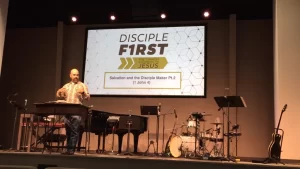
I loved this church’s emphasis on discipleship, which to them means building genuine relationships where you can be authentic even when life is messy and where you don’t have to pretend or worry that you’re not saying the right thing to make sure everyone knows you’re one of the “real Christians.”

Open-ended questions are welcomed here, questions like “so what does this mean for us practically, if we’re actually living out what Jesus said” or just saying “sometimes I have trouble believing that God is good and trusting him since I’ve lived through so much betrayal.”

There are no bizarre, specific rules like how many inches below your collarbone is your neckline allowed to be if you happen to be female.

This is not what most evangelical churches are like, based on my limited but varied experience, living in four different places during my childhood and attending numerous churches of various denominations growing up and with college friends.

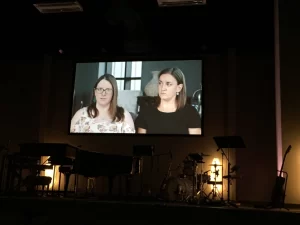
So last week, I was in a video that my church made about our discipleship group, and it actually turned out pretty well despite my awkwardness and I wanted to share this with my dear friends who have walked this path with me — some who don’t live here locally.

Maybe one of my biggest hopes (yes I’m aware that it’s overly idealistic) is that American Christianity will become more like this.

It’s been almost six years now since I moved out of my parents’ house, and almost three years since my cats and I moved cross country back to Texas.

I know this was a long post, but thank you for reading and sticking around while I live out my story.


********
Shop at our Amazon store! As an Amazon Influencer, this website earns from qualifying purchases.
Still learning to love myself: Through eating disorder recovery

Editorial Note: The following is reprinted with permission from Eleanor Skelton’s blog. It was originally published on March 26, 2022. 

Content note: discussion of eating disorders

One year ago, I’d just started a new job, and the first paycheck wouldn’t come for a whole month. 

I experienced food insecurity and unstable housing both in college and afterwards. The fear of not making it was so loud in my mind, and a little thought said: “Just don’t eat until you get paid.”

In that moment, I thought it made sense. As if I only deserve food if I do enough—if I work hard enough, if I earn enough money to justify allowing myself to eat. 

I now realize this isn’t normal. 

Last year, I was diagnosed with atypical anorexia or OSFED, which is just as serious as regular anorexia, but describes an eating disorder that is difficult to categorize according to diagnostic criteria. 

Because I’m autistic, it’s hard to remember that I have a body that has needs, so I get busy with work or school and sometimes I honestly forget to eat. But other times it’s been intentional. 

I hadn’t been eating enough food on a regular basis for nearly a decade. After a few weeks of trying to live on coffee and little else, I could barely climb stairs. Nerve pain shot down my neck into my arms while driving to work. 

I realized if I didn’t stop, if I didn’t get help, it would eventually kill me. 

Some of you have known me back when I was stuck in other self-sabotaging patterns like self-harm and unhealthy relationships. Eating disorders are quieter, harder to notice. 

Almost nobody sees if you miss a meal.  

Learning how to eat again wasn’t easy. It’s hard to find words for how difficult the first few months were—the stomach pain, bloating and falling asleep from exhaustion after meals because my body was struggling to process food. 

My nutritionist, therapists and care team keep telling me that I deserve food even if nothing else is going right—even if I make mistakes. They tell me that my body still needs fuel consistently to do what I need. 

Most of my friends know that I grew up in high-control communities (read: fundamentalist, Quiverfull, isolationist homeschooling) which left me feeling that I had no choice about what happened in my life and pushed me to wholly identify with a specific religious ideal—to be a living martyr. 

And you had to hate your body. The more you hated yourself, your own flesh, the more spiritual you were. 

Those born female were under intense pressure to be hypermodest, but also don’t commit the sin of gluttony. Enjoying anything too much—even food—was idolatry because what if you started to like it more than God. Dress like a 90s denim toned-down version of your pioneer farmer great-grandmother. Be just attractive enough to court and marry to repopulate the earth by birthing good little mini-Christians, but don’t be too pretty or someone else might sin just by noticing you. 

I was told my flesh was a sin. They told me to “buffet my body” like the Apostle Paul. If only I could suffer enough, hurt enough, finally punish myself enough, maybe I’d become more perfect. 

This was the sanctification I was taught. Starving myself seemed holy. 

Now I know this is a deeply unhealthy form of Christianity, but this is what I experienced. All these years later, I’m still learning what Love should be. 

I’m still learning that I don’t have to seek out painful experiences to become more perfect. I’m unlearning all the ways that I made myself feel less worthy.

And here, I have to give credit to several supportive friends and mentors who always gently remind me of my value. If not for all of you, I would not have survived.

Yes, my recovery comes from the determination I am finding to wake up every day and choose to eat… and live. But I am so grateful for those who remind me when I forget. 

“Coming apart at the seams
And no one around me knows
Who I am, what I’m on
Who I’ve hurt and where they’ve gone
I know that I’ve done some wrong
But I’m trying to make it right…
I know that I love you 
but I’m still learning to love myself.”

– “Still Learning,” Halsey 

********
Shop at our Amazon store! As an Amazon Influencer, this website earns from qualifying purchases.
This is a story about the unexpected

Editorial Note: The following is reprinted with permission from Eleanor Skelton’s blog. It was originally published on April 4, 2017. 

I know it’s been a long time since I’ve really blogged, but I’m doing so, so much better than I was.

I’ve been back in therapy for six months now.

I’ve been moved out for almost five years. I saw three different counselors in Colorado — a Christian psychologist and two counselors at my college off and on between 2011 and 2015.

My parents wanted me to see the Christian one because they thought he would convince me that moving out was a bad idea. He didn’t. He told me to be responsible and don’t go unless I could survive on my own, but he actually encouraged me to leave.

When I told my new counselor this, while reciting my entire History of Therapy (TM) to him, he laughed and said, “backfire!”

My first counselor taught me that I wasn’t responsible for other people’s emotions, like my dad’s outbursts.

He told me that leaving would involve a risk that I wasn’t ready to take yet. I asked him what that was and he said I needed to ask myself that question.

And he showed me that I wasn’t obligated to believe religious dogma that hurt me.

One day he told me that he wanted me to “stop thinking in terms of shoulds and musts and start thinking about wants and your reasonable heart’s desires.”

I asked him if that was wrong.

I recited that Bible verse that says, “But the heart is deceitful above all things and desperately wicked, who can know it?”

But my counselor said, “The former is living under the law and the latter is where freedom is and where Christ wants you to be.”

I didn’t have the faith to believe him yet, but I wanted to. I was still so scared.

My second counselor was secular. I saw him through my college’s mental health services program. He didn’t really understand the pain of trying so hard not to stop believing when everything you were raised with seems like a lie, but he definitely tried.

But he told me to try new things and he asked me what would happen if I carried less in my backpack going to campus every day.

He asked me to put my backpack beside my chair, instead of between me and him. I’d barricaded myself off without realizing it. Not having something between me and him while talking about deep emotions was unexpectedly vulnerable.

My third counselor was through my college again. She happened to be Christian and had been to seminary, so she could feel my faith wounds.

She told me that my flashbacks and nightmares were part of c-PTSD. We started a type of therapy to help my brain process old memories and not freeze up.

I found her after my first breakup, in the lurch of unexpected heartbreak. When I wanted to stop breathing and not exist.

Last summer, I knew I needed to go back.

I knew I wasn’t done yet. But I didn’t know how to begin again, to recount my whole life story all over again for a stranger who I would come to know but who knew nothing about me.

But then unexpectedly — and aren’t the best things so often like this — one of my pastors was starting graduate school for counseling last fall.

He started meeting with me. He knew parts of my story already, so vulnerability was both harder and easier. But there was really no one else I’d rather tell these things to.

It means so much when someone listens with their heart. They are more than just a counselor, then, they become an anchor.

In December, for the first time in my life, I didn’t want to hurt myself anymore.

I have wanted to hurt myself for as long as I can remember. Even as a tiny human, I believed that I deserved punishment and would invent penalties for myself when “getting in trouble” didn’t seem like enough.

I am learning to trust other people. I am trying not to withdraw so sharply when I am anxious.

I am healing.

And I want to start sharing some of what I’ve learned.

********
Shop at our Amazon store! As an Amazon Influencer, this website earns from qualifying purchases.
Healing

In the last few months I’ve been very triggered. I watched as someone I cared about was ostracized, gossiped and lied about. I watched as others participated in the gossip. I warned people, knowing doing so would likely not end well for me. I lost friends, felt judged… and relived a lot of past church trauma.

I made some different choices this time than I would have in the past. I did what I thought was right, and some of that may not have been what was best and some that I thought in the past would have been better to have done didn’t work, after all. There are just some situations that no matter what we do will not end well. I learned one thing: no matter what we do, we can’t usually stop some large entity intent on hurtling toward a bad end. At least that relieves me of some guilt or self-doubt from the past. And I’ve learned sometimes the only thing we can do is what we think will be best for ourselves – and that that’s not selfish, it’s just life.

Healing is an ongoing journey. It’s not linear. We take a step forward, sometimes three steps back. We move forward, then end up triggered by something and end up cycling back through everything all over again. Or – ugh – we end up in a situation that’s eerily similar to what hurt us to begin with, parallel on parallel, and we have to somehow navigate that AND all the memories and past hurts at the same time.

It’s OK to do that. And the fact that we can demonstrates that we really ARE healing, even if it doesn’t feel like it at the time.

A year ago I had an experience that brought major healing to an old hurt. It was sudden and unexpected. In the process I learned I could play the piano again. I didn’t think I ever would. After the triggers though, my playing gradually stopped. I haven’t played for close to three months, and haven’t played joyfully or for long for maybe twice that time.

Today brought some closure. Several surprises, several opportunities to remember good things that have happened, past healing moments. And somehow through today, I know the music is back again. I haven’t played yet, but the sadness that blocked the music isn’t blocking anymore. Nothing major happened today. Just memories, just acceptance, just love. And it was enough. And that’s healing, too.

********
Shop at our Amazon store! As an Amazon Influencer, this website earns from qualifying purchases.

Outside the Box: Recovering from obsessive guilt

Editorial Note: The following is reprinted with permission from Eleanor Skelton’s blog. It was originally published on March 7, 2016 as part of a series. 

Continued from What Is Joy?

“i am still learning that i am allowed to be human out here
inside it was not allowed
those things made a bad thing happen
so i still feel that. any tiny mistake… ” ~ anonymous friend

Obsessive guilt is no longer my religion.

But for many years, it was, and the scars left by it still linger for many of us. This post is for my friends whose wounds are still bleeding. This is for everyone who can’t find the words yet.

I’ve written before about my history of self-harm, prompted by years of being told when I was a small child that I murdered Jesus simply by being born, because of original sin.

Every breath I took, every time I threw a tantrum as a toddler, every time I didn’t obey my parents immediately without question, all these things drove nails into Jesus’ hands. Or so I was told.

This story on Homeschoolers Anonymous is very, very much like how I was raised. It’s like my mom is talking to me all over again.

“You are such a disappointment to God. He is sitting in heaven crying because of your sinfulness. Even if you were the only person who ever lived, Jesus would have had to die because of your sin! Your sin caused Jesus to be tortured and killed. It is just like you were there hammering the nails into him.”

Over and over, I was told that Jesus and the angels were always watching me, that they were disappointed in me when I talked back to my parents. That I made Jesus sad, that I hurt him.

Guilt for Jesus’ pain is why I self-harmed, starting at age 5. And none of the adults in my life then understood why.

We grew up with this mindset, believing that only guilt could dictate ethics. If you didn’t feel bad about yourself, you were prideful. If you weren’t thinking about Jesus’ suffering, you were ungrateful for his sacrifice.

And it’s not just those of us who were homeschooled in Christian fundamentalist households.

One of my Mormon friends told me she obsessively washed her hands when she felt sinful, because it made her feel less dirty. Later she found out it was part of her OCD diagnosis.

I’m also not the only one who thought I had to hurt myself because I caused Jesus pain. I have several friends who also did the same thing, for the same reason. The idea actually goes back to the middle ages and flagellantism, radicals in the Catholic church who beat themselves to mortify the flesh and identify with Christ in his suffering.

I used to dig my fingernails into my hands every time I referred to the divine without capital letters, because I believed I had disrespected the Almighty. Now I no longer believe my God is concerned with misspellings.

Those in the church probably don’t realize that the language they use often gives a very different idea than they are intending to, especially with children who take things literally. 

A recent Relevant magazine article explains it like this (link removed as the article is no longer available):

“If you tell a 10-year-old that he should be washed in blood, he’s probably going to imagine something closer to the opening scene of Blade than a loving Jesus who wants him to be happy forever. I pictured Jesus standing next to a giant bathtub that He was bleeding into while trying to make me dive into it like a Steven Curtis Chapman song in ’99.”

When we talk about the crucifixion as penal substitution and say that we also have to take up our cross, when we tell young children to prepare for martydom or teenagers to stand up for Jesus like Cassie Bernall at Columbine, some of us take these ideas far more seriously than we probably intended.

We hate ourselves, we struggle with feeling unworthy, and we believe that we are undeserving of love. I have friends who can’t convince themselves to take medicine until their pain becomes unbearable because they believe they deserve suffering.

My friend Ash shared this song with me last year, and I cried because it is me. For so long, I couldn’t accept love because I thought I wasn’t worthy.

Before you came the days just passed
But now I so cannot reach seconds
Within me thousand suns rise
And I’m praying for them to never disappear
Tell me what have I done to deserve something this beautiful.

Tell me why I deserve you
Why is it me you love? – Lafee, Tell Me Why / Wer Bin Ich, Nightcore remix

It’s a process, we can’t just instantly rewire our brains. We don’t magically become healthier.

I’m still wrestling with my own theology, struggling to imagine that my God is pure light and love, a radical idea from a Graham Cooke video I watched years ago:

“You are the beloved. It is your job to be loved outrageously. It is why I chose you. That is why I set My love upon you; that you would live as one who is outrageously loved; that you would receive a radical love, so radical it will blow all your paradigms of what you think love is. I know I will love you outrageously all the days of your life because I don’t know how to be any different. This is who I am, and this is who I will always be. This is the “I am” that I promised you. I am He that loves you outrageously. And you may love Me back with the love that I give you.

“You may love Me back outrageously with the outrageous love that I bestow upon you. And know this, you can only love Me as much as you love yourself. So My love comes this evening to set you free from yourself. To set you free from how you see yourself. To set you free from the smallness of your own thinking about yourself. My love comes to set you free from rejection and from shame and from low self-esteem and from despair and from abuse because when I look at you, I see something that I love. I see someone that I can love outrageously.

[….]

“There is no fear where I am present because My love casts out fear.

“Beloved, you are My beloved. You are My beloved. And in my love, I want you to feel good about yourself.”

Unraveling all the gnarly threads woven through our souls takes months, years.

It’s like recovering from addiction or learning to drive a car. We’re learning how to love and be loved. Remembering that we are all made of stardust.

So when you meet a former box-dweller, please be gentle and patient with us. We’re still recovering. It takes time.

I hope you guys enjoyed this series and a glimpse into the souls of these lovely guest writers.

********
Shop at our Amazon store! As an Amazon Influencer, this website earns from qualifying purchases.

Click to access the login or register cheese
YouTube
YouTube
Set Youtube Channel ID
BLUESKY
x  Powerful Protection for WordPress, from Shield Security PRO
This Site Is Protected By
Shield Security PRO